WORLD ENCYCLOPEDIA / POST-SUNDERING LINEAGES

The Peoples
of Avarun.

Six living lineages, many ways to belong. Ancient rulers and changed beings beyond them. Their origins, faces, stories and remarkable specialties do not add up to a ladder of worth.

THE ATLAS PRINCIPLE

Not a hierarchy of blood.

Humans lived before the Sundering. The catastrophe changed many peoples, while the precise curse mechanisms and early origins remain unsettled. Each profile distinguishes observed or possible bodily tendencies, learned magic specialties, cultural history and disputed creation stories. No race receives a biological IQ or EQ ranking, guaranteed magic mastery or automatic moral status.

Face studies are original illustrated character examples. They are not universal racial templates, species-identification tools or proof of parentage. Traits can be absent or present in different combinations; the six peoples are not the only sapient beings in Avarun.
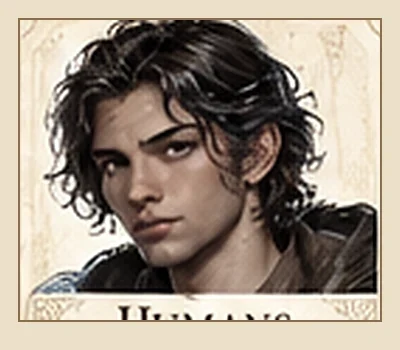
Original watercolor face sketch: one illustrative Humans adult, not a standard for all members of this ancestry
01 · pre-Sundering ancestry
The many paths

Humans

Adaptable learningAccord sequencing

Origins and history

Humans are recorded during the Age of Crowned Wings under dragon polities and later among Meridian Dominion states. Many were victims and opponents of the Athanor project; neither participation nor blame is inherited.

Post-Sundering human families migrated across the new seas and many changed through local conditions without forming a uniform people.

Typical face and inherited variations

No single human face: varied complexions, facial structures, hair textures and body types across all five continents. The portrait is one Willowbank traveller, not a standard.

Unique advantage, when present

Adaptation through flexible apprenticeship, cross-disciplinary trade and a large network of widely exchanged methods. This is a social and educational advantage often available to humans, not guaranteed greater IQ, EQ or faster evolution.

Specialty in Remanence arts

Pattern-Weaving: human-led river and city guilds are famous for combining modest compatible Accord procedures in reliable sequences. This is taught craft, not innate multipurpose spell power.

Limit and counterplay: Every step still needs a compatible trace, vessel and cost; no human can will a fragment to do anything.

Learning, judgment and emotional traditions

IQ / learning: Varied capacities; multilingual market mathematics and pragmatic negotiation are learned through schools and work rather than inherited intelligence.

EQ / social practice: Hearth-and-Threshold hospitality trains de-escalation and social coalition building in some towns, while other human institutions exploit outsiders.

Community: Ferries, crowns, home kitchens, archives, itinerant teaching and the many post-Sundering languages.

What people argue: A human archive says every newcomer is a guest; an excluded mixed family replies that being greeted is not being counted.

Origin confidence: recorded pre-Sundering existence; earliest emergence unknown. No divine genealogy is proven.
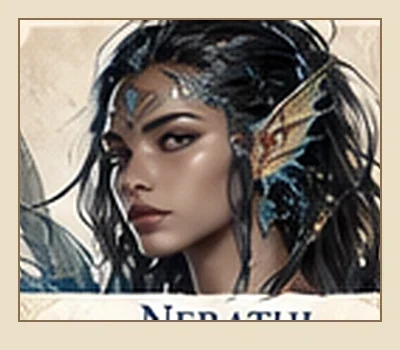
Original watercolor face sketch: one illustrative Nerathi adult, not a standard for all members of this ancestry
02 · post-Sundering associated lineage
Those who read the current

Nerathi

Aquatic proprioceptionWater-alignment reading

Origins and history

The oldest surviving marsh and coast accounts describe families transformed or newly recognized as Nerathi during early post-Sundering migration. The specific curse or imprint behind webbing has not been isolated; some families claim a much older water-kin heritage.

River pilots, teachers, accountants and inland artisans formed kin and contract networks long before modern Riverleague charter laws.

Typical face and inherited variations

Some have fine membrane folds between fingers or toes, water-shedding hair and narrow ear contours; plenty look indistinguishable from other Riverleague people. Skin and eye coloration vary.

Unique advantage, when present

Enhanced leverage when swimming, and for some individuals fine tactile detection of directional current against hands and feet. Not underwater breathing, water control or limitless endurance.

Specialty in Remanence arts

Current-Laying: trained practitioners use water motion as an environmental alignment cue for navigation and release-oriented Accords. Some Nerathi sensors find a moving channel easier to read, but any trained person may work the same compatible vessel.

Limit and counterplay: Pollution, cold, dehydration, turbulence and bad water flow undermine performance; no magic exists without a prepared imprint.

Learning, judgment and emotional traditions

IQ / learning: In pilot guilds, route estimation, layered map memory and rapid ferry arithmetic are cultivated skills, not a race-wide high IQ.

EQ / social practice: Crew-based rescue agreements cultivate turn-taking and conflict checks; individual emotional intelligence varies normally.

Community: Nine Reeds ferry systems, shared kitchens, waterline testimony, boat-family adoption and channel songs.

What people argue: Some call the river a home; inland Nerathi sometimes answer that a family can leave a river without leaving its people.

Origin confidence: early AS lineage evidence and shared river-family memory; precise transformation mechanism disputed. No divine genealogy is proven.

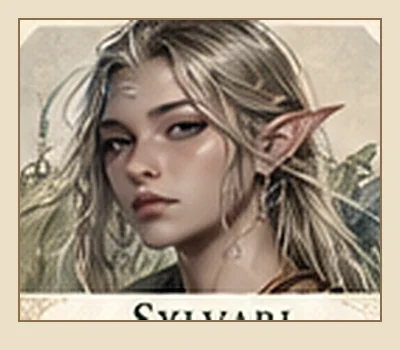
Original watercolor face sketch: one illustrative Sylvari adult, not a standard for all members of this ancestry
03 · post-Sundering named lineage
The patient witnesses

Sylvari

Dusk & directional acuityGrowth-alignment craft

Origins and history

Sylvari households trace themselves through scattered woodland and marshward recovery settlements after the Sundering. A popular claim says the forests remade them to endure. Archaeologists have not proven the original cause and early records include families who did not live in forests.

Glassworkers, orchard custodians, teachers, chapel servants, navigators and city builders developed diverse traditions. They are not a single forest kingdom.

Typical face and inherited variations

Frequently pointed or slightly elongated outer ears and delicate ear cartilage, but face shape and skin tone differ greatly; not all individuals have obvious ears or slender bodies.

Unique advantage, when present

When inherited sensory traits are present, can notice subtle dusk silhouettes and directional insect or water sounds; no universal plant conversation or immortality.

Specialty in Remanence arts

Growth-Listening: botanical apprentices keep seasonal trace and vessel ledgers, helping align gentle restoration Accords to existing plant functions. Skill improves through long observation; a plant cannot be ordered to grow from nothing.

Limit and counterplay: Plant health still needs soil, water, light and time; overworked vessels wear; dusk cues fail under fog or unfamiliar surroundings.

Learning, judgment and emotional traditions

IQ / learning: Some academies emphasize careful longitudinal comparison and memory notebooks, not intrinsically greater intelligence.

EQ / social practice: Garden mediation rituals teach listening to competing generations; empathy is social practice, never built into a pointed ear.

Community: Managed groves, glasswork, gardening, chapel debates, moon observation and generations of urban migration.

What people argue: A woodland poem calls them keepers of trees; a port-side Sylvari family insists its oldest inheritance is a bread oven.

Origin confidence: modern named lineage and early woodland settlement chains; biological birth mechanism and lifespan not proven. No divine genealogy is proven.

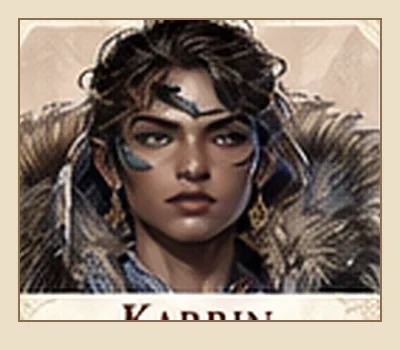
Original watercolor face sketch: one illustrative Karrin adult, not a standard for all members of this ancestry
04 · post-Sundering named lineage
The quiet listeners

Karrin

Bone-conducted sensitivityAccord resonance checks

Origins and history

Karstholds song-records and river archives tell of changed families surviving shattered rockworks after the Sundering. Some descendants could perceive vibrations through bone conduction. The association with caves is historical, not proof that all Karrin originated underground.

Their households spread by marriage, adoption, trade and schooling into all Oravel polities, including Willowbank.

Typical face and inherited variations

Often unremarkable at a glance; individual Karrin can show small cheekbone or temple variations and strong ear anatomy, but there is no verified universal facial mark.

Unique advantage, when present

Can detect certain repeating structural rhythms or mechanical irregularities before a conventional listener, provided the surface transmits vibration. It is never mind-reading or lie detection.

Specialty in Remanence arts

Resonance-Checking: qualified examiners compare controlled vibrations in a prepared Accord vessel and detect a bad fit before release; others can learn instrument-based alternatives.

Limit and counterplay: Crowded impacts, machinery noise or migraine can overwhelm perception; the person still needs calibration tools and may make false inferences.

Learning, judgment and emotional traditions

IQ / learning: Careful structural diagnostics and acoustic mathematics are common trained crafts, not a claim of higher IQ.

EQ / social practice: A silence-before-judgment custom helps some councils hear testimony accurately; it offers no supernatural access to feelings.

Community: Echo Row instruments, rescue routes, public cistern work, bridge inspection and quiet-room rights.

What people argue: An inspector says a stone told her it was cracking; another corrects her: the stone vibrated, and she interpreted it.

Origin confidence: approved Karrin sensory tendency; geographic and causal beginnings unverified. No divine genealogy is proven.

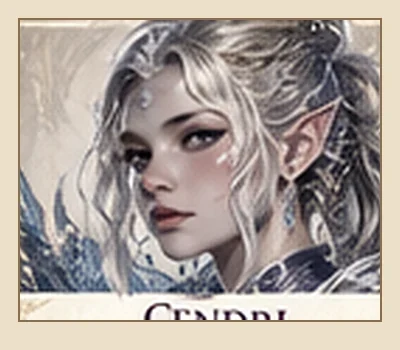
Original watercolor face sketch: one illustrative Cendri adult, not a standard for all members of this ancestry
05 · post-Sundering named lineage
The heat readers

Cendri

Thermal gradient readingHeat-vessel tuning

Origins and history

Cinder Isles and volcanic-port lineages identify families that developed or retained heat-related bodily adaptations around the Sundering and subsequent migrations. The myth that a dragon breathed life into every Cendri is devotional, not a proven descent record.

Seafarers, ceramicists, physicians, lighthouse keepers and orchard families formed diasporas across Oravel. Some avoid hot landscapes entirely.

Typical face and inherited variations

Varied humanlike faces with occasional ash-like skin freckling, metallic flecks or patterned hair; these are family variations, not flame eyes or a compulsory glowing tattoo.

Unique advantage, when present

Fine temperature contrast detection and rapid recognition of a warming tool or vessel seam when the trait is present. No innate fire conjuring.

Specialty in Remanence arts

Thermal-Balancing: trained makers tune existing heat-holding or release traces in kiln, food-preservation and lamp Accords, using thermometry and protective equipment alongside perception.

Limit and counterplay: A burning vessel still harms a Cendri; heat work consumes materials and wears containers; thermal comfort is not raw magical output.

Learning, judgment and emotional traditions

IQ / learning: Schools prize kiln calculations and fault records, not an innate higher IQ or analytical birthright.

EQ / social practice: Harbor crew calm-under-alarm drills can look like emotional steadiness; anxiety, courage and empathy remain individual.

Community: Port markets, kilns, storm shelters, medical houses and carefully logged rescue lanterns.

What people argue: A patron claims the Cendri are made of ash; a Cendri physician replies that scars are injuries, not genealogies.

Origin confidence: approved thermal-adaptation folklore and port diaspora; original curse mechanism unverified. No divine genealogy is proven.

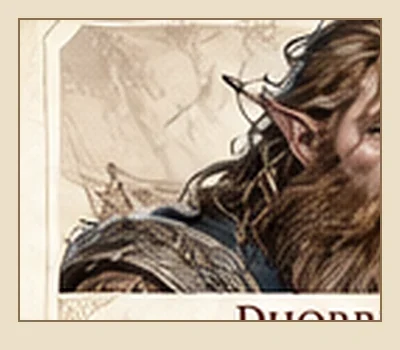
Original watercolor face sketch: one illustrative Dhorren adult, not a standard for all members of this ancestry
06 · post-Sundering named lineage
The steadfast makers

Dhorren

Balance & contact controlAccord vessel stewardship

Origins and history

Dhorren genealogists preserve differing accounts of families adapted to demanding stoneworks, mountains and river locks after the Sundering. No reliable ancient race chart proves an exclusive rock-born ancestry or one universal dwarf kingdom.

Stonemasons, archivists, cooks, ferry pilots, couriers and urban smiths coexist; not all Dhorren are miners or short.

Typical face and inherited variations

Diverse heights, builds and facial hair. Some have compact proportions, broad hands and strong joints, but a clean-shaven tall Dhorren remains entirely plausible.

Unique advantage, when present

Precise body balance and fine contact-pressure control during bracing and tool placement when present; not superstrength or immunity to fatigue.

Specialty in Remanence arts

Anchor-Stewardship: skilled makers select and maintain durable stone and metal Accord housings. Their advantage is meticulous wear accounting plus possible tactile stability, not free earth magic.

Limit and counterplay: Joint strain, compressed air, repetitive injury and structural cracks remain real; no vessel can support infinite force.

Learning, judgment and emotional traditions

IQ / learning: Workshop geometry and materials budgets come from apprenticeship and accessible education, not a hereditary spatial-IQ bonus.

EQ / social practice: Formal work-partner agreements and collective responsibility can encourage trust, but temperament and empathy differ among people.

Community: Gatekeeping in the engineering sense, public locks, tool guilds, family carpentry and rescue masonry.

What people argue: A tourist calls Brann Dorrel a dwarf made for locks. His daughter answers that he was trained for them, and can still make mistakes.

Origin confidence: working Willowbank lineage and skilled house records; heritable mechanisms unsettled. No divine genealogy is proven.

THE LIVING WORLD REGISTER

Newly documented lineages.

Six common Oravel races are not the full world. Iveri descend from Humans, while Nerathi Tidecarriers are Nerathi. Neither is a separate seventh common race.

HUMAN-DERIVED LINEAGE

Iveri

Parent ancestry: Humans. Some adult men have a natural gestational chamber sustaining an existing viable pregnancy. The trait is not universal, magical or guaranteed.

Origins: Overseas diaspora records mention carrying fathers, while their homeland, inheritance, emergence relative to the Sundering and sea-god attribution remain unverified.

Life and limits: Safe birth care, consent, recovery and family recognition matter. Full Iveri dossier.

NERATHI FAMILY VARIATION

Nerathi Tidecarriers

Parent ancestry: Nerathi. Some adult men inherit a carrying-fold supporting already viable transferred embryonic life. It differs from Iveri anatomy and does not grant water breathing or unlimited magic.

Origins: Riverleague and coastal families disagree whether this developed before or after the Sundering.

Life and limits: Safe dry recovery, qualified midwives, consent and inheritance rights matter. Full Tidecarrier dossier.

Future records belong here with parentage, place, testimony, observed traits, counterexamples, chronology and uncertainty. An unknown lineage need not become a new species or rewrite a census.

BEYOND THE SIX PUBLIC CENSUS LINEAGES

Families, ancient rulers, and speaking strangers.

The seventh Willowbank census category, “Mixed / Multiple / Unreported,” is an administrative choice, not a seventh species. True Dragons and distinct sapient changed beings belong in the wider encyclopedia, not forcibly assigned to that column.

identity and family category, not a separate race

Mixed / Multiple Lineage

Mixed-kin marriages, fostering, adoption and household alliances existed before and after the Sundering. The administrative Mixed / Multiple / Unreported column is a census convenience, not a seventh biological species.

Families self-identify, change census descriptions, keep multiple languages and maintain kin regardless of what is visibly inherited.

Appearance, strengths and limits

Any combination of ancestral facial characteristics or none visibly discernible. Fosterage and adoption may make family identity completely independent of outward traits.

No universal hybrid stat buff. Individuals with any compatible sensory traits can use them, while social multilingual access may be an advantage when welcomed.

Identity alone does not confer magic or immunity.

historical sapient sovereign lineage, status unresolved

True Dragons

Pre-Sundering dragon courts ruled humans and were sometimes worshipped as gods. One popular tradition says dragons were born of Vaen; this is a source tradition, not confirmed divine genealogy.

Veiled Centuries wars shattered dragon-led states. Surviving accounts say True Dragons cannot reproduce. Whether any now live, become human or return in a dragon form remains undetermined.

Appearance, strengths and limits

Ancient reliefs depict scale, wings, horns and immense forms but artistic and political exaggeration prevents a single reliable facial reconstruction.

Known ancient political scale and formidable presence; precise inherited flight, flame or weather control cannot be verified from prayer inscriptions.

Historical royal titles and worship do not establish divinity or moral superiority; reproduction and survival constraints still apply.

diverse sentient monsters, beasts or demons, not one race

Speaking Changed Beings

Avarun traditions say some beasts, monsters and demons were born from the creators' grief; this is a popular explanation rather than cosmological proof. Some once-unreasoning beings are said to have gained consciousness after the Sundering.

Some petition for citizenship, others for treaty standing, and many remain animals or dangerous creatures without speech. None can be assessed solely by appearance.

Appearance, strengths and limits

No standard face: body plans differ across many kinds of being and cannot be ranked by resemblance to human features.

A particular creature may have flight, smell, night sight or other natural advantages; no single power belongs to all.

A voice or silence does not conclusively prove or disprove personhood. Predation and crimes still judged by actions and evidence.

Families are more than ancestry.

Male gestation occurs naturally in a few families, including rare Nerathi Tidecarriers and a human-derived minority lineage called the Iveri. It can sometimes also be supported by a difficult, voluntary Cradle Accord. Same-sex marriages, plural families and divergent regional religious laws are described in The Many Cradles of Avarun.

HOW THE WORLD STAYS CONSISTENT

Three rules about power.

1. Inherited sense ≠ spell

A Karrin who notices structural vibration still needs instruments and practice to test a vessel. A Cendri who feels a heat gradient is not fireproof. A Nerathi who reads a current cannot summon water without a compatible imprint.

2. Training shapes specialties

Sylvari botanical records, Dhorren bracing techniques and human multi-step Accord guilds are traditions of practiced craft, not race-exclusive powers. Anyone with access can study.

3. IQ and EQ belong to people

Language, reasoning, empathy, spatial planning and emotional awareness vary from person to person. Schools, tools, disability accommodations and cooperative cultures create opportunity; ancestry never guarantees superiority.

Read the full illustrated encyclopedia's archival source and evidence review · Read the Contested Census Hearing · Explore the five-region ancient reconstruction