AVARUN · THE LIVING PEOPLES · APPROVED LORE

The Peoples
of Avarun.

Six familiar lineages. Innumerable families. Ancient dragon courts, changed voices, and six ways of noticing a world that never stopped changing. Study their faces, origins, powers, strengths and their limits.

THE DISTINCTION THAT MATTERS

A sense is not a destiny.

The Sundering changed bodies and societies, but no ancestor's blood grants moral worth, automatic divine power or a birthright to knowledge. Some bodies have sensory advantages; cultures develop specialist crafts; individual talent and training remain decisive.

No race has higher IQ or EQ by decree. Some schools cultivate careful reasoning, memory or empathy; none inherit a universal advantage in intelligence or compassion.

“Different roots. A shared horizon.”

A Riverleague archive maxim. Representative sketches depict one possible face from each community. They are illustrations, not racial identification tools.

6Common living lineages described in Oravel
7Illustrated examples, including mixed heritage
5Continents with many additional unknown peoples
1Shared set of Five Laws of Remanence

THE ILLUSTRATED FIELD GUIDE

Six peoples, many faces.

Open each profile's sections to read its story, typical appearance, useful senses, magical arts, intellectual traditions and limits. A trait does not appear in every individual.

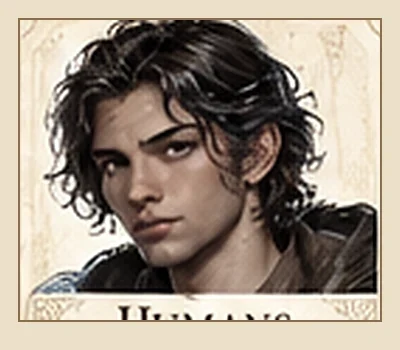
Concept sketch of one Humans individual, an illustrative face rather than a universal physical templateFIELD STUDY 01 / 06

pre-Sundering ancestry

Humans

The many paths

Adaptable learningAccord sequencing
Origin and history

Humans are recorded during the Age of Crowned Wings under dragon polities and later among Meridian Dominion states. Many were victims and opponents of the Athanor project; neither participation nor blame is inherited.

Post-Sundering human families migrated across the new seas and many changed through local conditions without forming a uniform people.

Historical uncertainty: recorded pre-Sundering existence; earliest emergence unknown

Face and anatomy

No single human face: varied complexions, facial structures, hair textures and body types across all five continents. The portrait is one Willowbank traveller, not a standard.

Broad variation, no signature inherited magical organ and no single shared bodily advantage.

Distinct advantage and magic

Natural or variable edge: Adaptation through flexible apprenticeship, cross-disciplinary trade and a large network of widely exchanged methods. This is a social and educational advantage often available to humans, not guaranteed greater IQ, EQ or faster evolution.

Specialty: Pattern-Weaving: human-led river and city guilds are famous for combining modest compatible Accord procedures in reliable sequences. This is taught craft, not innate multipurpose spell power.

Trade-off: Every step still needs a compatible trace, vessel and cost; no human can will a fragment to do anything.

Intelligence, empathy and culture

Learned reasoning: Varied capacities; multilingual market mathematics and pragmatic negotiation are learned through schools and work rather than inherited intelligence.

Social skills: Hearth-and-Threshold hospitality trains de-escalation and social coalition building in some towns, while other human institutions exploit outsiders.

Everyday life: Ferries, crowns, home kitchens, archives, itinerant teaching and the many post-Sundering languages.
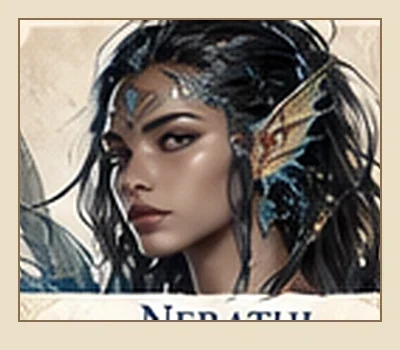
Concept sketch of one Nerathi individual, an illustrative face rather than a universal physical templateFIELD STUDY 02 / 06

post-Sundering associated lineage

Nerathi

Those who read the current

Family biology: Some adult men in rare Nerathi Tidecarrier families can naturally carry an existing pregnancy. This is a voluntary, individual anatomical variation, not a trait shared by all Nerathi or a magical power. Read the record.

Aquatic proprioceptionWater-alignment reading
Origin and history

The oldest surviving marsh and coast accounts describe families transformed or newly recognized as Nerathi during early post-Sundering migration. The specific curse or imprint behind webbing has not been isolated; some families claim a much older water-kin heritage.

River pilots, teachers, accountants and inland artisans formed kin and contract networks long before modern Riverleague charter laws.

Historical uncertainty: early AS lineage evidence and shared river-family memory; precise transformation mechanism disputed

Face and anatomy

Some have fine membrane folds between fingers or toes, water-shedding hair and narrow ear contours; plenty look indistinguishable from other Riverleague people. Skin and eye coloration vary.

Some families inherit flexible finger or toe webbing and a stronger dive reflex. They must still breathe air and can drown. Extended salt exposure may damage sensitive skin.

Distinct advantage and magic

Natural or variable edge: Enhanced leverage when swimming, and for some individuals fine tactile detection of directional current against hands and feet. Not underwater breathing, water control or limitless endurance.

Specialty: Current-Laying: trained practitioners use water motion as an environmental alignment cue for navigation and release-oriented Accords. Some Nerathi sensors find a moving channel easier to read, but any trained person may work the same compatible vessel.

Trade-off: Pollution, cold, dehydration, turbulence and bad water flow undermine performance; no magic exists without a prepared imprint.

Intelligence, empathy and culture

Learned reasoning: In pilot guilds, route estimation, layered map memory and rapid ferry arithmetic are cultivated skills, not a race-wide high IQ.

Social skills: Crew-based rescue agreements cultivate turn-taking and conflict checks; individual emotional intelligence varies normally.

Everyday life: Nine Reeds ferry systems, shared kitchens, waterline testimony, boat-family adoption and channel songs.

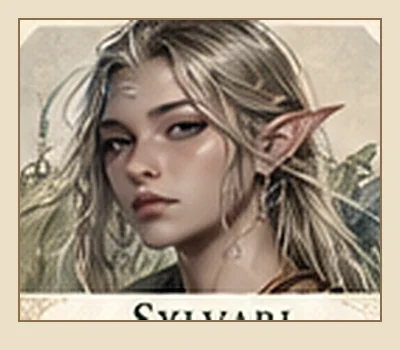
Concept sketch of one Sylvari individual, an illustrative face rather than a universal physical templateFIELD STUDY 03 / 06

post-Sundering named lineage

Sylvari

The patient witnesses

Dusk & directional acuityGrowth-alignment craft
Origin and history

Sylvari households trace themselves through scattered woodland and marshward recovery settlements after the Sundering. A popular claim says the forests remade them to endure. Archaeologists have not proven the original cause and early records include families who did not live in forests.

Glassworkers, orchard custodians, teachers, chapel servants, navigators and city builders developed diverse traditions. They are not a single forest kingdom.

Historical uncertainty: modern named lineage and early woodland settlement chains; biological birth mechanism and lifespan not proven

Face and anatomy

Frequently pointed or slightly elongated outer ears and delicate ear cartilage, but face shape and skin tone differ greatly; not all individuals have obvious ears or slender bodies.

Some report finer dusk-acuity and outer-ear directional sound sensitivity; both are variable and can cause bright-light or crowded-noise discomfort. Longevity relative to humans remains unverified.

Distinct advantage and magic

Natural or variable edge: When inherited sensory traits are present, can notice subtle dusk silhouettes and directional insect or water sounds; no universal plant conversation or immortality.

Specialty: Growth-Listening: botanical apprentices keep seasonal trace and vessel ledgers, helping align gentle restoration Accords to existing plant functions. Skill improves through long observation; a plant cannot be ordered to grow from nothing.

Trade-off: Plant health still needs soil, water, light and time; overworked vessels wear; dusk cues fail under fog or unfamiliar surroundings.

Intelligence, empathy and culture

Learned reasoning: Some academies emphasize careful longitudinal comparison and memory notebooks, not intrinsically greater intelligence.

Social skills: Garden mediation rituals teach listening to competing generations; empathy is social practice, never built into a pointed ear.

Everyday life: Managed groves, glasswork, gardening, chapel debates, moon observation and generations of urban migration.

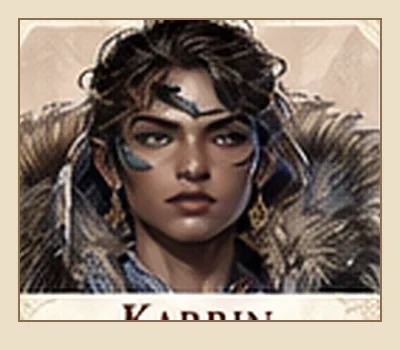
Concept sketch of one Karrin individual, an illustrative face rather than a universal physical templateFIELD STUDY 04 / 06

post-Sundering named lineage

Karrin

The quiet listeners

Bone-conducted sensitivityAccord resonance checks
Origin and history

Karstholds song-records and river archives tell of changed families surviving shattered rockworks after the Sundering. Some descendants could perceive vibrations through bone conduction. The association with caves is historical, not proof that all Karrin originated underground.

Their households spread by marriage, adoption, trade and schooling into all Oravel polities, including Willowbank.

Historical uncertainty: approved Karrin sensory tendency; geographic and causal beginnings unverified

Face and anatomy

Often unremarkable at a glance; individual Karrin can show small cheekbone or temple variations and strong ear anatomy, but there is no verified universal facial mark.

In some individuals fine bone-conducted vibration sensitivity permits tactile recognition of rhythmic impacts through a stable surface.

Distinct advantage and magic

Natural or variable edge: Can detect certain repeating structural rhythms or mechanical irregularities before a conventional listener, provided the surface transmits vibration. It is never mind-reading or lie detection.

Specialty: Resonance-Checking: qualified examiners compare controlled vibrations in a prepared Accord vessel and detect a bad fit before release; others can learn instrument-based alternatives.

Trade-off: Crowded impacts, machinery noise or migraine can overwhelm perception; the person still needs calibration tools and may make false inferences.

Intelligence, empathy and culture

Learned reasoning: Careful structural diagnostics and acoustic mathematics are common trained crafts, not a claim of higher IQ.

Social skills: A silence-before-judgment custom helps some councils hear testimony accurately; it offers no supernatural access to feelings.

Everyday life: Echo Row instruments, rescue routes, public cistern work, bridge inspection and quiet-room rights.

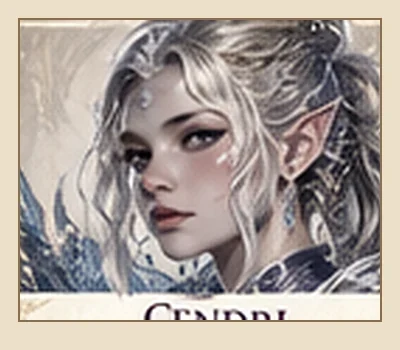
Concept sketch of one Cendri individual, an illustrative face rather than a universal physical templateFIELD STUDY 05 / 06

post-Sundering named lineage

Cendri

The heat readers

Thermal gradient readingHeat-vessel tuning
Origin and history

Cinder Isles and volcanic-port lineages identify families that developed or retained heat-related bodily adaptations around the Sundering and subsequent migrations. The myth that a dragon breathed life into every Cendri is devotional, not a proven descent record.

Seafarers, ceramicists, physicians, lighthouse keepers and orchard families formed diasporas across Oravel. Some avoid hot landscapes entirely.

Historical uncertainty: approved thermal-adaptation folklore and port diaspora; original curse mechanism unverified

Face and anatomy

Varied humanlike faces with occasional ash-like skin freckling, metallic flecks or patterned hair; these are family variations, not flame eyes or a compulsory glowing tattoo.

Some individuals distinguish gradual thermal gradients more sensitively or tolerate certain temperature shifts with less discomfort. None is immune to smoke, burns, heat stroke or poor air.

Distinct advantage and magic

Natural or variable edge: Fine temperature contrast detection and rapid recognition of a warming tool or vessel seam when the trait is present. No innate fire conjuring.

Specialty: Thermal-Balancing: trained makers tune existing heat-holding or release traces in kiln, food-preservation and lamp Accords, using thermometry and protective equipment alongside perception.

Trade-off: A burning vessel still harms a Cendri; heat work consumes materials and wears containers; thermal comfort is not raw magical output.

Intelligence, empathy and culture

Learned reasoning: Schools prize kiln calculations and fault records, not an innate higher IQ or analytical birthright.

Social skills: Harbor crew calm-under-alarm drills can look like emotional steadiness; anxiety, courage and empathy remain individual.

Everyday life: Port markets, kilns, storm shelters, medical houses and carefully logged rescue lanterns.

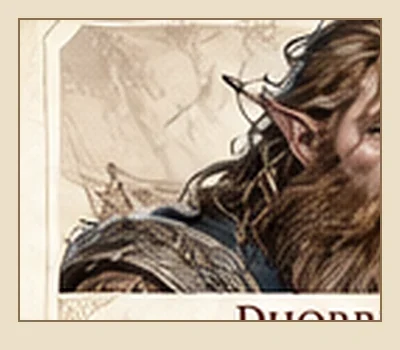
Concept sketch of one Dhorren individual, an illustrative face rather than a universal physical templateFIELD STUDY 06 / 06

post-Sundering named lineage

Dhorren

The steadfast makers

Balance & contact controlAccord vessel stewardship
Origin and history

Dhorren genealogists preserve differing accounts of families adapted to demanding stoneworks, mountains and river locks after the Sundering. No reliable ancient race chart proves an exclusive rock-born ancestry or one universal dwarf kingdom.

Stonemasons, archivists, cooks, ferry pilots, couriers and urban smiths coexist; not all Dhorren are miners or short.

Historical uncertainty: working Willowbank lineage and skilled house records; heritable mechanisms unsettled

Face and anatomy

Diverse heights, builds and facial hair. Some have compact proportions, broad hands and strong joints, but a clean-shaven tall Dhorren remains entirely plausible.

Some lines show compact leverage and high proprioceptive balance under repetitive load, but individuals vary and injuries still accumulate.

Distinct advantage and magic

Natural or variable edge: Precise body balance and fine contact-pressure control during bracing and tool placement when present; not superstrength or immunity to fatigue.

Specialty: Anchor-Stewardship: skilled makers select and maintain durable stone and metal Accord housings. Their advantage is meticulous wear accounting plus possible tactile stability, not free earth magic.

Trade-off: Joint strain, compressed air, repetitive injury and structural cracks remain real; no vessel can support infinite force.

Intelligence, empathy and culture

Learned reasoning: Workshop geometry and materials budgets come from apprenticeship and accessible education, not a hereditary spatial-IQ bonus.

Social skills: Formal work-partner agreements and collective responsibility can encourage trust, but temperament and empathy differ among people.

Everyday life: Gatekeeping in the engineering sense, public locks, tool guilds, family carpentry and rescue masonry.

No matching group in the six Oravel profiles. This is not an exhaustive list of the peoples of all five continents.

HISTORY IS BIGGER THAN A CENSUS FORM

Kinship and beings beyond the six.

The Willowbank ledger includes a “mixed / multiple / unreported” reporting option, but it does not create a seventh biological race. Historic dragons and speaking changed beings are distinct subjects, not categories you should force into a human-style ancestry list.

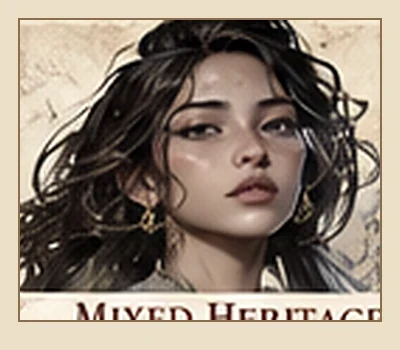
Illustrative mixed-lineage resident, not a new biological species

identity and family category, not a separate race

Mixed / Multiple Lineage

Kin across boundaries

Mixed-kin marriages, fostering, adoption and household alliances existed before and after the Sundering. The administrative Mixed / Multiple / Unreported column is a census convenience, not a seventh biological species.

Physical / sensory: Traits may resemble one relative, several relatives, neither, or vary over generations. No guaranteed half-and-half power combination.

Known advantage: No universal hybrid stat buff. Individuals with any compatible sensory traits can use them, while social multilingual access may be an advantage when welcomed.

Magic: Accord learning depends on training and available materials; two ancestries do not automatically stack spell powers or eliminate cost.

Limit: Identity alone does not confer magic or immunity.

approved community fact; genetics, fertility, transmission and boundaries remain unresolved.

historical sapient sovereign lineage, status unresolved

True Dragons

The crowned wings

Pre-Sundering dragon courts ruled humans and were sometimes worshipped as gods. One popular tradition says dragons were born of Vaen; this is a source tradition, not confirmed divine genealogy.

Physical / sensory: The wide variety of historical descriptions makes a universal powers list impossible. Their bodies and memories cannot be sampled directly in current Oravel studies.

Known advantage: Known ancient political scale and formidable presence; precise inherited flight, flame or weather control cannot be verified from prayer inscriptions.

Magic: Dragon-court Remanence rites might have exploited appropriate imprints, but no modern scholar has authenticated an unlimited draconic Accord or deity-level control.

Limit: Historical royal titles and worship do not establish divinity or moral superiority; reproduction and survival constraints still apply.

ancient dragon rule established; true origin, live population and alleged returns unresolved.

diverse sentient monsters, beasts or demons, not one race

Speaking Changed Beings

The petition of the speaking

Avarun traditions say some beasts, monsters and demons were born from the creators' grief; this is a popular explanation rather than cosmological proof. Some once-unreasoning beings are said to have gained consciousness after the Sundering.

Physical / sensory: No common anatomy or powers: each named individual/species needs its own study.

Known advantage: A particular creature may have flight, smell, night sight or other natural advantages; no single power belongs to all.

Magic: Individual compatible imprints and learned Arts of Accord may be possible; not all conscious beings can or wish to practice magic.

Limit: A voice or silence does not conclusively prove or disprove personhood. Predation and crimes still judged by actions and evidence.

some contemporary persons possess reason in changed forms; origin myths and uniform classification not proven.

BOUNDED ADVANTAGES

What makes a person exceptional?

Most sensory advantages appear in only some individuals. Magical specialties are **learned applications of compatible traces**, not innate limitless spells. These distinctions are now part of the approved setting framework, while inheritance mechanisms remain unknown.

PeoplePhysiological edgeMagic or craft specialtyCounterbalance
HumansAdaptable learningAccord sequencingEvery step still needs a compatible trace, vessel and cost; no human can will a fragment to do anything.
NerathiAquatic proprioceptionWater-alignment readingPollution, cold, dehydration, turbulence and bad water flow undermine performance; no magic exists without a prepared imprint.
SylvariDusk & directional acuityGrowth-alignment craftPlant health still needs soil, water, light and time; overworked vessels wear; dusk cues fail under fog or unfamiliar surroundings.
KarrinBone-conducted sensitivityAccord resonance checksCrowded impacts, machinery noise or migraine can overwhelm perception; the person still needs calibration tools and may make false inferences.
CendriThermal gradient readingHeat-vessel tuningA burning vessel still harms a Cendri; heat work consumes materials and wears containers; thermal comfort is not raw magical output.
DhorrenBalance & contact controlAccord vessel stewardshipJoint strain, compressed air, repetitive injury and structural cracks remain real; no vessel can support infinite force.
IQ & EQ: There is no genetic intelligence tier or empathy score assigned to any of these peoples. Learned cultural strengths, institutions and apprenticeships can differ. The portraits depict one person each, never a rigid standard of intelligence, morality or power.

HISTORY'S UNANSWERED QUESTIONS

From dragon courts to the Lone Moon.

Ancient Avarun

Humans already live under dragon-led polities. Worship of rulers survives in conflicting inscriptions; no court's claim proves true divinity.

The Veiled Centuries

Dragon civilization falls through wars; True Dragons' reproduction ceases in surviving accounts. Present-day survivors or returns remain unknown.

The Sundering

Continents divide and people change. Later names such as Nerathi, Karrin, Cendri, Sylvari and Dhorren do not prove that one curse created exactly one race.

The Lone Moon Era

People migrate, marry, adopt, teach and build mixed communities. Willowbank's census shows how records can miscount the very people they claim to protect.

ARCHIVE AND PROVENANCE

What we know, what we believe.

The record supports ancient human and dragon societies, post-Sundering transformations, some changed sensory traits, and present-day mixed households. It does not prove the true divine origins of any race, the biological transmission of every trait, the location of every ancestor, or the full roster of people living on the other four continents.

The popular story of Vaen and Ilyra is a living tradition, not verified cosmic genealogy. Nor does the claim that every monster was born from their sadness erase the agency of conscious changed individuals.

NEW ARCHIVE / FAMILY AND GESTATION

Beyond ancestry: who can carry, and who can marry?

Some Iveri men and rare Nerathi Tidecarriers have a natural capacity for gestation. The rare and costly Cradle Accord can sometimes support pregnancy in other compatible consenting men. Across Oravel, same-sex marriage, plural unions and their religious interpretations differ by jurisdiction.

Read The Many Cradles of Avarun, its marriage laws and disputed Sevenfold Diagram →